Instant Pot vs Slow Cooker: Which One Should You Buy?
A detailed comparison of Instant Pot pressure cookers and slow cookers. We break down cooking time, flavor, versatility, safety, and value to help you decide.

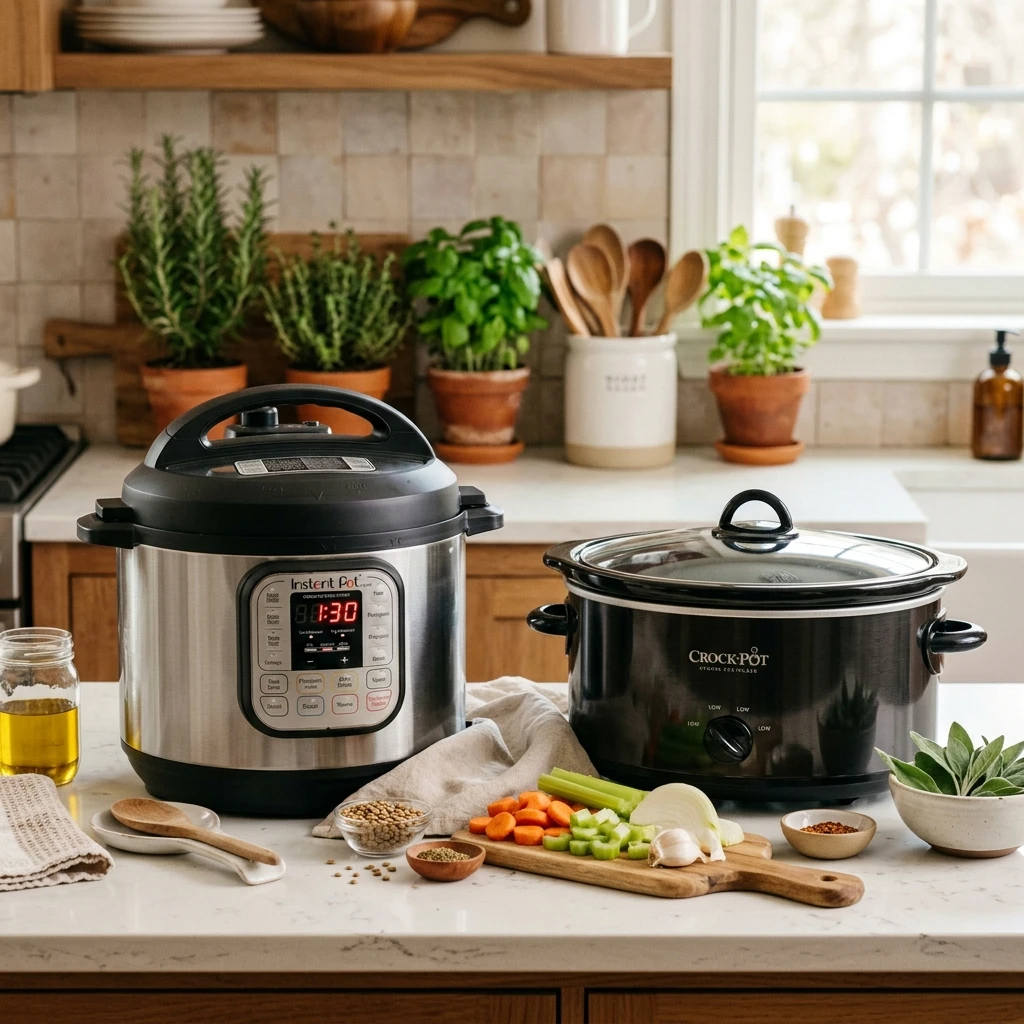
Table of Contents
Affiliate Disclosure: We may earn a commission if you purchase through our links. This doesn't affect our reviews.
Listing check: Amazon titles and photos change. Confirm the steel, length, and model named on this page match the listing before you buy — this is a research note from Nora Whitfield, not a copy of the Amazon product copy.
Instant Pot and slow cooker both turn a cheap cut into dinner. They do not use the same heat. A slow cooker is a ceramic or coated crock with low heat around the sides for hours. An Instant Pot is a sealed steel pot that raises the boiling point with pressure, then offers a menu of other buttons.
This is a research-based guide, not a hands-on test. Nora Whitfield's desk compared Instant Brands function lists, Crock-Pot oval-cooker copy, and the owner mix-ups that keep showing up: Duo versus Duo Plus versus Duo Crisp, and "slow cook" on a steel insert versus a ceramic crock. We did not run a chili playoff or invent a restaurant résumé. For the mechanics-only version, use what's the difference between an Instant Pot and a slow cooker. For recipes, use the beginner Instant Pot meals. For a dedicated crock with better controls, use best slow cookers for meal prep or adjustable slow cookers.
Before you click: Instant and crock listing checks
- Duo, Duo Plus, Duo Crisp, Pro Crisp, Vortex. Duo and Duo Plus are pressure multi-cookers. Duo Plus is the 9-in-1 class that lists sous vide, yogurt, and sterilize on current Instant pages. Duo Crisp and Pro Crisp add an air-fry lid. Vortex is an air fryer. Buying a Vortex when you wanted pressure is the classic tile error.
- 6-quart versus 8-quart versus Mini. Instant's 6-quart Duo Plus is the household default (about 4–6 bowls). An 8-quart is a chili-for-a-crowd pot and a larger lid. The 3-quart Mini is a different use case. "Instant Pot" without a size is unusable.
- Slow-cook mode is not a Crock-Pot. Instant's own documentation describes bottom heating on the steel inner pot. A traditional slow cooker wraps heat around a ceramic insert. Owner threads that say "Instant slow cook is hotter / drier / less even" are describing that geometry.
- Cook & Carry versus a basic oval. Crock-Pot's 7-quart Cook & Carry listings emphasize a locking lid and an oval that fits a small chicken. A round 4-quart without a lock is a different pot. "Crock-Pot 7 quart" still dumps you into casseroles and multi-cookers.
- Sous vide button versus a circulator. If the job is a weekly water bath, buy a clamp-on stick from best sous vide machines. The Instant program is a held pot of water.
Speed
Pressure wins the clock. Dried beans, a shoulder that would sit 8–10 hours on Low, and weeknight stew are the reason Instant sold the category. The slow cooker wins a different clock: load it at 8 a.m. and ignore it. That only works if your morning is organized. Neither fact needs a taste-test badge.
Texture and flavor, without a lab coat
Hours in a crock give collagen time. Pressure gives you shreddable meat on a weeknight. Sauces reduce differently because water cannot leave a sealed pot the way it leaves a vented crock lid. If you want the all-day stew texture, keep the ceramic pot. If you want dinner at 7 after a 6 p.m. start, use pressure, then reduce on saute.
Versatility
A current Duo Plus page is a menu: pressure, slow cook, rice, steam, saute, yogurt, sous vide, warm, sterilize. Saute in the same pot is the practical win — brown, then seal. A slow cooker does one heat shape well. If the counter only has room for one appliance and you also make rice and beans, Instant is the consolidator. Dedicated rice still has a better case on the rice cooker guide if rice is daily.
Head-to-head
| Feature | Instant Pot (Duo Plus class) | Dedicated slow cooker |
|---|---|---|
| Core physics | Sealed pressure + extras | Open-lid-friendly low heat |
| Typical stew time | About 30–90 minutes under pressure | 4–10 hours |
| Brown in the same pot | Yes (saute) | Usually no |
| Slow-cook evenness | Bottom heat, steel insert | Wrap-around crock |
| Leave-the-house comfort | Follow the manual; it is still a pressure cooker | Unpressurized crock |
| Street price band | Often $80–150 | Often $30–80 |
Safety, stated plainly
A ceramic slow cooker has no pressure lock. Generations of cooks left one on Low at work. An Instant Pot has lid locks, valves, and a steam release you have to learn. Quick release can throw scalding steam. Natural release is the safer default for soups and beans. If a household will not read a pressure-release paragraph, buy the crock.
Recommended listings (not a scorecard)
Instant Pot Duo Plus 9-in-1 (6-quart)
Confirm Duo Plus, 6-quart, and the 9-in-1 function list. That is the model this desk points at when someone wants one pot for pressure, saute, and an occasional slow-cook or sous vide program. Skip Duo Crisp unless you also want the air-fry lid.
Check current Instant Pot Duo Plus price
Crock-Pot 7-quart oval Cook & Carry
Confirm 7-quart oval, Cook & Carry (locking lid), and a ceramic insert. That is the cheap dedicated crock for potluck transport and all-day Low. If you want probes and programmable ramps, step up to the adjustable slow cooker guide.
Check current Crock-Pot 7-Quart Cook and Carry price
Verdict
If you are buying one appliance for a small kitchen, buy the Instant Pot Duo Plus. Use pressure for weeknights. Treat slow-cook mode as a backup, not a ceramic crock. Add a $40 oval later if you miss all-day Low.
If you already like leaving a pot on while you leave the house, and you do not want to learn a valve, buy the Crock-Pot oval and ignore Instant ads for a year.
If the missing tool is a circulating water bath, that is a sous vide stick, not another Instant button.
Nora Whitfield
Writer, Kitchenware Authority
Nora Whitfield writes Kitchenware Authority's reviews and buying guides. Every knife, pan, and appliance is vetted against maker specifications, materials and safety documentation, and the long-run experience verified home cooks report — not first-hand lab tests.
Upgrade Your Kitchen Skills
Get research-based gear reviews, maintenance tips, and buying guides from the Kitchenware Authority desk.
No spam. Research notes from Nora Whitfield, not invented reader counts.