Cast Iron vs Stainless Steel: Which Cookware Is Better?
A detailed comparison of cast iron and stainless steel cookware. Learn which material is right for your cooking style and budget.

Editorial Review
Independent, research-driven reviews by our editorial team
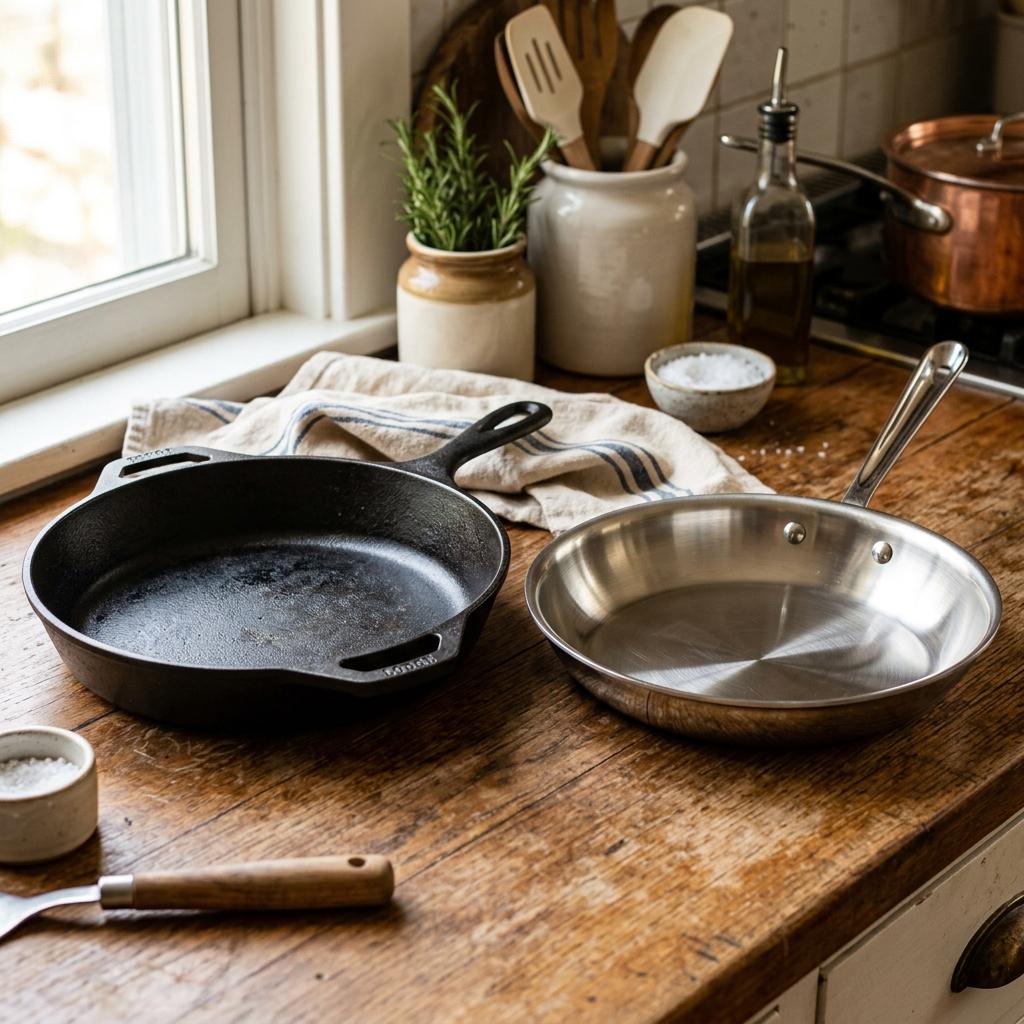
Table of Contents
Affiliate Disclosure: We may earn a commission if you purchase through our links. This doesn't affect our reviews.
Cast iron and stainless steel are the two most respected materials in the cooking world. Both are used by professional chefs, both last a lifetime, and both produce outstanding results. But they cook differently, require different care, and excel at different tasks.
Choosing between them isn't about which is "better" — it's about which is better for you.
The Fundamental Differences
| Property | Cast Iron | Stainless Steel |
|---|---|---|
| Heat retention | Exceptional | Moderate |
| Heat responsiveness | Slow | Fast |
| Weight | Very heavy (8+ lbs) | Moderate (3-4 lbs) |
| Maintenance | Seasoning required | Dishwasher safe |
| Reactivity | Reacts with acids | Non-reactive |
| Price (12" skillet) | $20-40 | $80-200+ |
| Lifespan | 100+ years | 30+ years |
Heat Retention vs. Responsiveness
Cast iron's greatest strength is heat retention: once hot, it stays hot. Drop a cold steak into a screaming-hot cast iron pan and the temperature barely drops. This makes it ideal for searing , you get that perfect, deep brown crust.
But cast iron is slow. It takes 5-7 minutes to heat evenly and responds sluggishly to temperature changes. Turn the heat from high to low and you'll wait a couple of minutes for the pan to adjust.
Stainless steel (with an aluminum core) is the opposite: it heats quickly, adjusts rapidly to temperature changes, and cools down fast. This responsiveness makes it ideal for sauces, sautéing, and any technique where you need precise temperature control.
When to Use Each
Use Cast Iron For:
- Searing meat , steaks, pork chops, burgers, chicken thighs
- Cornbread and Dutch babies , the hot surface creates a crispy crust
- Deep frying , retains heat even when submerged in oil
- Campfire cooking , indestructible outdoors
- Baking , goes from stovetop to oven smoothly
Use Stainless Steel For:
- Pan sauces , fond develops beautifully, deglazing is effortless
- Sautéing , quick temperature changes for delicate techniques
- Acidic foods , tomato sauces, wine reductions, lemon-based dishes
- Stocks and braises , non-reactive surface won't affect flavor
- Everyday cooking , lower maintenance and lighter weight
Our Top Picks
Best Cast Iron: Lodge 12-Inch Skillet
The Lodge 12-inch is the most popular cast iron skillet in America for a reason: it works beautifully and costs under $30. Pre-seasoned at the factory with vegetable oil, it's ready to cook right out of the box. At 8 pounds, it's hefty enough to retain serious heat.
Lodge has been making cast iron in South Pittsburg, Tennessee since 1896. Their pans are functionally identical to cast iron skillets costing 5-10x more.

Lodge Cast Iron Skillet (12-inch)
Lodge
The American workhorse that costs less than a lunch but lasts for centuries.
Best Stainless Steel: All-Clad D3
The All-Clad D3 is the gold standard of stainless steel cookware. Its 3-ply construction (stainless → aluminum → stainless) delivers even heating from center to rim, excellent responsiveness, and a cooking surface that will last a lifetime. Made in Pennsylvania with a lifetime warranty.

All-Clad D3 Stainless Steel Skillet (12-inch)
All-Clad
The industry standard for professional stainless steel pans, featuring tri-ply bonded construction.
All-Clad D3 Stainless Skillet
Best Stainless Steel Value: Made In Stainless Clad
Made In's 5-ply stainless frying pan offers premium performance at a DTC price point. Thicker construction than All-Clad with better heat retention, at roughly 40% lower cost. An excellent option for cooks who want quality stainless without the All-Clad premium.

Made In Stainless Clad Frying Pan (10-inch)
Made In
Direct-to-consumer professional cookware that challenges the old-school legacy brands.
Made In Stainless Clad Frying Pan
Cast Iron Care 101
Cast iron isn't difficult to maintain, but it does require a different approach than stainless:
- Clean with hot water and a brush. A little soap is fine (the old "no soap" myth has been debunked). Avoid steel wool.
- Dry immediately and thoroughly. Cast iron rusts if left wet. Dry it on a hot burner for 30 seconds.
- Apply a thin coat of oil after each use. A drop of vegetable oil wiped across the surface maintains the seasoning.
- Never soak cast iron. Extended contact with water strips the seasoning and promotes rust.
- Re-season in the oven occasionally. Coat the entire pan with a thin layer of flaxseed or vegetable oil and bake upside down at 450°F for one hour.
Stainless Steel Care
Stainless steel is lower-maintenance but benefits from proper technique:
- Preheat before adding food. This is the single most important rule , it prevents sticking.
- Use BKF (Bar Keepers Friend) for stubborn stains. This mild abrasive cleanser removes discoloration and water spots without scratching.
- Dishwasher safe. Unlike cast iron, stainless steel handles detergent and high heat without damage.
- Don't preheat empty on high. This can cause permanent rainbow discoloration ("heat tint"). Preheat on medium.
The Verdict: Why Not Both?
Here's the truth most cookware guides won't tell you: you should own both. They're not competing , they're complementary.
Start with a Lodge 12-inch cast iron skillet ($25) for searing and a stainless steel 10-12 inch skillet ($80-130) for everything else. Together, they cover 90% of stovetop cooking for under $160. That's a better investment than any single premium pan at triple the price.
More Cookware: For a deeper dive, read our stainless steel cookware guide. Interested in other kitchen equipment? See the best stand mixers and best blenders.
Nora Whitfield
Writer, Kitchenware Authority
Nora Whitfield writes Kitchenware Authority's reviews and buying guides. Every knife, pan, and appliance is vetted against maker specifications, materials and safety documentation, and the long-run experience verified home cooks report — not first-hand lab tests.
Upgrade Your Kitchen Skills
Get chef-curated gear reviews, maintenance tips, and exclusive buying guides delivered to your inbox.
Join 15,000+ home cooks. No spam, ever.