Best Stand Mixer for Kneading Bread Dough: Hook, Batch, Motor
Choose the best stand mixer for kneading bread dough by hook style, motor headroom, batch size, and how often you bake loaves.

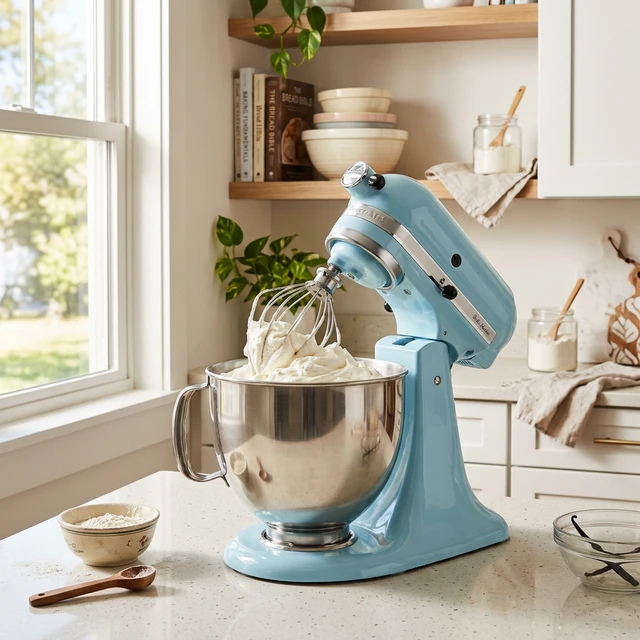
Table of Contents
Affiliate Disclosure: We may earn a commission if you purchase through our links. This doesn't affect our reviews.
Listing check: Amazon titles and photos change. Confirm the steel, length, and model named on this page match the listing before you buy — this is a research note from Nora Whitfield, not a copy of the Amazon product copy.
Affiliate Disclosure: Kitchenware Authority is an Amazon Associate. We earn from qualifying purchases at no extra cost to you. This helps support our independent research and chef-reviewed guides.
Bread dough is the hardest common job for a home stand mixer. Cookies and cake batter are short, forgiving tasks. Bread asks the motor, gears, bowl, and dough hook to work under load for several minutes at a time.
This is a research-based guide, not a hands-on test. Nora Whitfield's desk compared current KitchenAid, Cuisinart, Ankarsrum, and Hamilton Beach maker pages, published bowl sizes and motor listings, and the listing mix-ups that waste a click: KSM150 is not KSM8990, SM-50 is not SM-35, and a roller-and-scraper bowl is not a planetary dough hook. We did not time a knead or score crumb. Colors and bundles move, so this page stays on the identity you can verify before you order.
Desk take: Buy a 5-quart tilt-head (Artisan or Cuisinart SM-50) if bread is occasional sandwich dough. Buy a bowl-lift KitchenAid if you already live in that hub and bake dense dough weekly. Buy Ankarsrum Original if bread is the main hobby. Skip Hamilton Beach if you want a weekly bagel machine. The four-mixer field lives on best stand mixers for home bakers. The brand-only fork is KitchenAid vs Cuisinart. The single Artisan body is the KitchenAid Artisan 5-quart review.
Weigh flour on a kitchen scale before you blame the hook. The pans those loaves go into are in essential bakeware for beginners.
What a listing will not tell you
Amazon tiles for "best stand mixer for bread" mix 3.5-quart Minis, 4.5-quart Classics, 5-quart Artisan tilt-heads, 6-quart Professional bowl-lifts, Cuisinart Precision Master bodies, and Ankarsrum roller bowls photographed next to a C-hook.
- KSM150 is not KSM8990. KitchenAid Artisan tilt-head family (often KSM150PS plus a color suffix) lists a 5-quart handled bowl and a 325-watt motor. Professional 600 / KSM8990-class is a 6-quart bowl-lift with a different head geometry. A red mixer thumbnail is not enough. Confirm tilt-head versus bowl-lift on the spec line.
- Artisan 5-quart is not Classic 4.5-quart. Classic / K45SS is a smaller bowl, usually without a handle, and a lower watt listing. It photographs like Artisan. It is not the same bread headroom.
- SM-50 is not SM-35. Cuisinart Precision Master SM-50 is the 5.5-quart, 500-watt, 12-speed tilt-head. SM-35 is the 3.5-quart Mini. SM-50BC and similar endings are finish codes, not a different capacity. A title that says only "Cuisinart stand mixer" is a junk drawer.
- Ankarsrum roller is not a C-hook. Assistent Original uses a rotating 7-liter bowl with a roller and scraper. That is a different dough system from KitchenAid's planetary hook. Do not buy Ankarsrum expecting the same attachment hub or the same motion.
- Hamilton Beach 4-quart is not a weekly bread workhorse. The common 7-speed, 4-quart, 300-watt listings are starter mixers for softer dough. They share "dough hook included" language with machines that can actually hold a stiff bagel batch.
Quick Answer
| Bread baker type | Best direction |
|---|---|
| Occasional sandwich bread | KitchenAid Artisan or Cuisinart SM-50 |
| Weekly bread baker | Bowl-lift KitchenAid, Cuisinart SM-50 with smaller batches, or Ankarsrum |
| Serious multi-loaf baking | Ankarsrum Original |
| Wants one mixer for everything | KitchenAid Artisan, unless bread is the main job |
What Matters for Bread Dough
Batch size: A mixer that is fine for one loaf can struggle with double batches. Stay inside the manual's capacity guidance. Flour weight matters more than a recipe's "cups."
Dough stiffness: Bagel dough and low-hydration pizza dough are much harder on a mixer than soft sandwich bread or enriched dough. If the mixer walks, smells hot, slows hard, or makes unusual noises, stop and reduce the batch.
Hook design: A dough hook should stretch and fold dough without forcing it to climb endlessly. Bowl-lift and bread-focused machines often handle this better than lighter tilt-head mixers.
Heat and strain: Several minutes under load is the test the spec sheet does not show. Treat wattage as a listing number, not a lab score. Gear reduction and bowl geometry matter more than a peak-watt photo.
Best Bread-Focused Upgrade: Ankarsrum Original
Ankarsrum's current product materials emphasize a 7-liter bowl, Swedish manufacture, a multi-year warranty, and a unique dough technique. Instead of a standard planetary head, the bowl rotates while a roller and scraper work the dough.
That makes Ankarsrum the most bread-focused home mixer in this cluster. It has a learning curve, and it is not a KitchenAid hub clone. Compare it if you bake multiple loaves or dense doughs often.
Listing check: Title should say Assistent Original or Ankarsrum Original with the 7-liter stainless bowl and the roller-and-scraper kit. Skip planetary "Ankarsrum-style" no-name tiles and any photo that shows a KitchenAid C-hook.
Skip this mixer if: you mainly want cookies, frosting, and a pasta-roller hub, or you want a tilt-head you already know how to use.
Check current Ankarsrum Original price
Best Platform Pick: KitchenAid Artisan
KitchenAid Artisan is a strong overall stand mixer, but it is not the first choice for heavy bread specialists. KitchenAid lists a 5-quart bowl, 10 speeds, metal construction, and a front hub with a large optional-attachment catalog, which makes it the safer all-around kitchen platform.
Buy Artisan if bread is one job among many. If bread is the main job, compare larger bowl-lift models and Ankarsrum first. The single-body notes live on the Artisan 5-quart review.
Listing check: Confirm KSM150 / Artisan Series 5-Quart Tilt-Head. Skip KSM8990 bowl-lift tiles, Classic 4.5-quart, and Artisan Mini 3.5-quart. A pasta-roller hero shot is usually a bundle, not the in-box kit.
Skip this mixer if: you knead dense bread several times a week, you need a 6-quart bowl-lift, or you will never use the hub and want the Cuisinart value body instead.
Check current KitchenAid Artisan price
Best Value Bread Pick: Cuisinart Precision Master SM-50
Cuisinart lists the SM-50 with a 5.5-quart bowl, 500-watt motor, 12 speeds, die-cast metal construction, dough hook, flat paddle, whisk, and splash guard. For value-focused bakers, those specs make it a sensible bread-capable alternative to KitchenAid Artisan.
The tradeoff is ecosystem. Cuisinart has optional attachments, but it does not match KitchenAid's broader hub platform. That split is the whole KitchenAid vs Cuisinart page.
Listing check: Spec line should say Precision Master SM-50, 5.5-quart, 500 watts, 12 speeds. Skip SM-35 Mini tiles and any "Cuisinart mixer" photo that shows a 3.5-quart bowl.
Skip this mixer if: you already know you want KitchenAid hub tools, or you need a dedicated bread machine more than a tilt-head.
Check current Cuisinart Precision Master price
Best Budget Starter: Hamilton Beach 7-Speed
Hamilton Beach lists its 7-speed, 4-quart stand mixers with a 300-watt motor, planetary mixing action, dough hook, whisk, flat beater, and splatter shield. That is enough for lighter baking and occasional softer dough.
Do not buy it expecting the same durability or dough headroom as the higher-end machines. It is a budget starter, not a weekly bread workhorse.
Listing check: Confirm 4-quart and the 7-speed planetary listing. Skip any Hamilton Beach tile that borrowed a 5-quart stainless bowl photo from another brand.
Skip this mixer if: bread is a weekly habit, you want metal gears you can service for a decade, or you already know you will step up in a year.
Check current Hamilton Beach stand mixer price
Dough Hook and Capacity Tips
- Use the dough hook, not the flat beater, for bread.
- Start slow so flour hydrates before the dough tightens.
- Keep dense dough batches smaller than soft dough batches.
- Let the mixer rest if the motor housing becomes hot.
- Use a kitchen scale so hydration and flour weight stay consistent.
- If you only need even vegetable slices for a focaccia topping, that is a mandoline, not a reason to buy a bigger mixer.
Verdict
For occasional bread plus everyday baking, buy KitchenAid Artisan or Cuisinart SM-50. For bread as the main hobby, compare Ankarsrum Original first. For a low-cost trial, Hamilton Beach is fine for lighter doughs, but it is not the machine to push hard every week.
Sources Checked
- KitchenAid Artisan 5 Quart Tilt-Head Stand Mixer
- Cuisinart Precision Master 5.5-Quart Stand Mixer
- Ankarsrum Assistent Original stand mixer
- Hamilton Beach stand mixers
The head-to-head capacity matchup is in Ankarsrum vs KitchenAid stand mixers.
Nora Whitfield
Writer, Kitchenware Authority
Nora Whitfield writes Kitchenware Authority's reviews and buying guides. Every knife, pan, and appliance is vetted against maker specifications, materials and safety documentation, and the long-run experience verified home cooks report — not first-hand lab tests.
Upgrade Your Kitchen Skills
Get research-based gear reviews, maintenance tips, and buying guides from the Kitchenware Authority desk.
No spam. Research notes from Nora Whitfield, not invented reader counts.